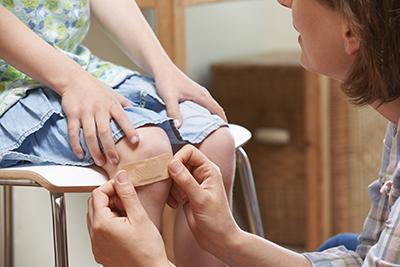
Here’s your first-aid guide on how to care for minor childhood injuries.
In a perfect world, your child would never get injured, sick, or hurt; unfortunately, this just isn’t 100 percent preventable. Children are deeply curious and far more fearless than adults, which often means that they leave themselves prone to injuries and incidents along the way. Fortunately, most minor illnesses and injuries can be treated from the comfort of home.
Quick and Dirty First Aid Tips for Injuries
Minor burns, cuts, scrapes, and wounds won’t necessarily bring your child into the pediatrician’s office but you do want to know that you are doing everything you can to treat the injury. For minor scrapes, cuts, and wounds, gently clean the area with water to wash away any debris. If there is blood, apply pressure first for about 10-15 minutes before washing the wound. Then apply antibiotic ointment and a bandage to the area to prevent an infection.
If your child is dealing with a strain or sprain, using the RICE (rest, ice, compression and elevation) method can certainly help. Ask your child’s healthcare provider about any over-the-counter pain medications they can use that might help them manage their pain as the injury heals.
When to Call Your Pediatrician
It’s important to recognize when injuries can be treated at home and when you need to make a trip to the pediatrician’s office. You should turn to a pediatrician if,
- There are signs of an infection (e.g. fever; increased redness; pus or drainage)
- There is a visible deformity after injury
- There was a popping or snapping sound at the moment of injury
- Pain is severe or getting worse
- Your child can’t put weight on the injured leg, ankle or foot
- Bleeding doesn’t stop after 10-15 minutes of applying pressure
Treating Minor Illnesses
So, what constitutes a minor illness? Minor illnesses include colds, ear infections, sore throats, and stomach flu. Viral infections like colds and certain ear infections don’t respond to antibiotics, so often the best course of action is to keep your child well hydrated and rested so the body can fight the infection. Of course, you also want to know when you should turn to a pediatrician for treatment. It’s time to call your pediatrician if,
- Your child is dealing with a severe sore throat and is having trouble swallowing or breathing
- Your child’s fever is high (102.5 F for children 3 months to 3 years and 103 F in children older than 3 years)
- Their symptoms are getting worse or aren’t improving with home care
- Your child is showing signs of dehydration
- Your child is acting strangely (e.g. severely lethargic; confused)
- New symptoms appear
- Symptoms persist for more than 5 days
If you are ever concerned about an illness or injury your child is dealing with, it’s always best to play it safe and turn schedule an appointment with your child’s pediatrician.